


- scritto da EditorialTeam
Do iPhones Have Lithium Batteries? Type, Life and Care
- scritto da EditorialTeam
Yes. Every iPhone uses a built-in rechargeable lithium-ion battery. This battery type gives an iPhone high energy capacity in a thin body, accepts fast and partial charging, and gradually loses capacity as it chemically ages. Knowing how it works makes it easier to charge normally, check battery health, and recognize when service is needed.
Apple describes iPhone batteries as lithium-ion. That applies to the original iPhone and current models. The exact cell size, internal layout and capacity vary by model, but the underlying rechargeable battery technology is the same.
You may see third-party specifications call a phone battery “lithium-polymer.” The terms can overlap in consumer electronics because modern pouch cells may use a polymer-based separator or electrolyte system. For an iPhone owner, Apple’s official description is the clearest one: a built-in rechargeable lithium-ion battery. The care rules do not change because a third-party page uses a different label.
During charging, lithium ions move through the cell and energy is stored. During use, the process reverses and releases electrical energy to the phone. A battery-management system monitors charge level, temperature and power demand, while iOS adjusts charging and performance to protect the cell.
Lithium-ion technology fits a phone better than older nickel-based rechargeable batteries because it stores more energy for its size and does not require a full discharge before recharging.
Charge when it is convenient; you do not need to wait for 0%. The biggest practical concern is heat. Use a compatible power source, keep the phone ventilated, and remove a case if the device becomes unusually warm while charging.

A quality USB-C power bank can safely provide portable power because the iPhone controls how much power it accepts. For a compact option, the RORRY CharmGo® D2 5000mAh Power Bank has a built-in cable, keychain-size body and an Apple Watch charging surface, so it can cover short daily top-ups without a separate cable.

Apple uses fast charging to reach roughly 80% quickly, then slows the current to reduce stress and heat. Optimized Battery Charging can delay charging above 80% when the phone expects to remain plugged in. On iPhone 15 and later, Settings > Battery > Charging also lets you choose a charge limit between 80% and 100% in 5% steps.
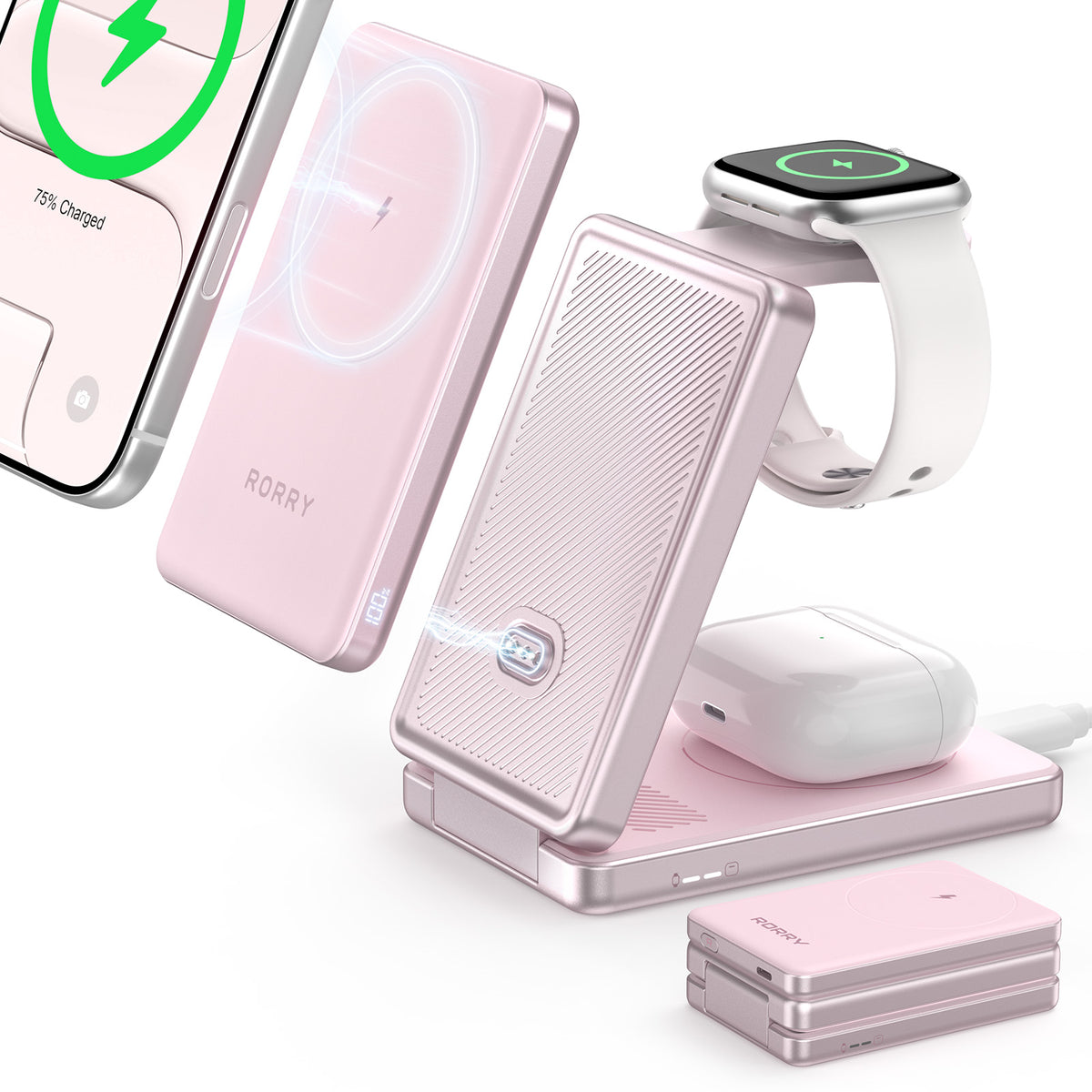
For a desk or bedside setup, the RORRY AuraDock® M2 10000mAh 4-in-1 Charging Station combines 15W magnetic iPhone charging, 5W Apple Watch charging and earbud charging with a detachable 10000mAh magnetic power bank. It keeps the phone aligned at home while giving you a portable battery for later.

Wired charging is usually more energy-efficient, while magnetic wireless charging is easier to align and use. Either method is suitable when the equipment is compatible. If the iPhone becomes hot, pause charging, move it away from direct sunlight and allow it to cool before continuing.
Battery lifespan is measured by chemical condition and charge cycles, not simply by age. One cycle is completed after you use a total equal to 100% of the battery’s capacity. It can be spread across several partial discharges.

|
iPhone generation |
Apple design target |
Where to check |
|
iPhone 14 and earlier |
80% original capacity after 500 complete cycles under ideal conditions |
Settings > Battery > Battery Health & Charging |
|
iPhone 15 and later |
80% original capacity after 1000 complete cycles under ideal conditions |
Settings > Battery > Battery Health |
Temperature history, charging pattern and power demand all affect chemical aging. A lower maximum-capacity percentage is normal over time; replacement becomes useful when shorter runtime or reduced peak performance interferes with daily use.
Yes, when the phone and battery are undamaged and used normally. The iPhone monitors temperature and charging conditions, and certified charging equipment includes additional electrical protections. However, a damaged lithium-ion cell can overheat or fail.
Warning signs include the screen or back lifting away from the frame, a sweet chemical smell, hissing, smoke or unusual heat that continues after charging stops. Power the phone off if it is safe to do so, disconnect it from power and arrange professional service. Do not press the case closed, puncture the battery or place the device in household trash.
Repeated exposure to high heat accelerates chemical aging. Avoid charging under bedding, inside a hot car or in direct sun. Charging to 100% when you need the range is not a failure; reducing time spent both very hot and fully charged is simply better for long-term battery health.
Yes. An iPhone battery is a consumable component and can be replaced through Apple or a qualified repair provider. Professional replacement is the safer option because the battery is glued inside the phone and can be damaged by bending or puncturing. Apple and many authorized recycling programs also accept devices and batteries for proper recycling; do not put a loose lithium battery in household waste.
Apple officially identifies iPhone batteries as rechargeable lithium-ion batteries. Some third-party descriptions use lithium-polymer for the pouch-cell construction, but that does not change normal charging guidance.
Normal fast charging with compatible equipment does not automatically damage the battery. The iPhone manages input and slows charging near 80%; excess heat is the larger concern.
Yes. iOS manages charging and Optimized Battery Charging can reduce the time spent at 100%. Keep the phone uncovered and use undamaged, compatible equipment.
Yes. An iPhone with its battery installed can normally travel in carry-on baggage. Airlines may apply their own rules, especially to damaged devices, so check before flying.
A damaged, crushed, punctured, swollen or severely overheated battery can catch fire, although normal use is generally safe. Stop using a phone that shows physical battery damage.
Every iPhone uses rechargeable lithium-ion battery technology because it delivers high energy density, flexible charging and a useful service life in a thin phone. Charge whenever convenient, use compatible equipment, let iOS manage the final stage, and protect the phone from excess heat. Check Battery Health when runtime declines, and replace rather than continue using a swollen or damaged battery.
Share:
USB 2.0 vs USB 3.0: Speed, Charging, and Best Uses
Apple iPhone 16 Review Is It Still Worth Buying in 2026