


- von Fuzley
How Many Watts to Charge a Phone? Full Wattage Guide
- von Fuzley
Phone charger wattage tells you how much power a charger can provide. Many iPhones, Samsung Galaxy phones, and Google Pixels use roughly 20W to 45W for fast wired charging. Select Motorola, OnePlus, OPPO, and Xiaomi phones can reach 68W, 80W, 90W, or more with compatible equipment.
Wattage, shown as W, measures how quickly a charger can deliver power: watts = volts x amps. The large number on the adapter is its maximum output, not a fixed amount pushed into every device. A 45W charger has 45W available, but a 20W phone requests only a supported level.
The same distinction matters when you want fast charging away from an outlet. A portable USB-C power bank can provide PD fast charging, but its wattage describes output speed rather than how much energy it stores. Storage capacity is measured in milliamp-hours, or mAh.
Higher wattage helps only when the phone, charger, cable, and charging standard support the same faster mode. The lowest limit becomes the bottleneck.

When you connect a modern USB-C charger, the charger and phone identify a compatible power level before fast charging begins. The phone controls the request and changes it during the charging session.
The charger rating is available output; the phone has a separate input limit. Connecting a 20W phone to a 45W charger does not make it a 45W phone or force in extra power. Actual charging cannot exceed the lower limit.
USB Power Delivery (USB PD) is widely used for fast charging over USB-C. Programmable Power Supply (PPS) adjusts voltage in smaller steps and is required for the highest modes on some Samsung and Google phones. Matching wattage without matching the protocol can still produce slower charging.
The biggest practical improvement is usually the move from 5W to 20W. The benefits above 20W depend much more on the exact phone and how the charger will be used.
|
Charger wattage |
Best use |
Practical result |
|
5W |
Overnight charging and small accessories |
Works with phones but feels slow during the day |
|
20W |
Most iPhones and basic phone fast charging |
Strong balance of speed, size, and cost |
|
30W |
Newer phones, Pixels, tablets, and shared use |
Adds headroom for devices that exceed 20W |
|
45W |
Compatible Galaxy phones and mixed devices |
Reaches higher modes only with the right protocol and cable |
|
65W and above |
Select high-power Android phones |
May require the brand's supported adapter, protocol, and cable |
A 5W adapter works when time does not matter and suits many low-power accessories. It feels slow during daytime phone use because navigation, calls, games, and the screen consume part of the incoming energy.
Twenty watts is a useful entry point for modern fast charging. Apple specifies a 20W or higher USB-C adapter for iPhone 12 and later. For a single iPhone, it delivers the main speed improvement people notice over 5W.
A 30W charger adds headroom for recent Pixels, newer iPhones, smaller tablets, and households sharing one adapter. A phone limited to 20W still charges normally but does not use the extra capacity.
Forty-five watts matters most for devices designed to request it. Select Samsung Galaxy models support 45W Super Fast Charging with a compatible PPS adapter and cable. For lower-power phones, its main benefit is flexibility for other devices.
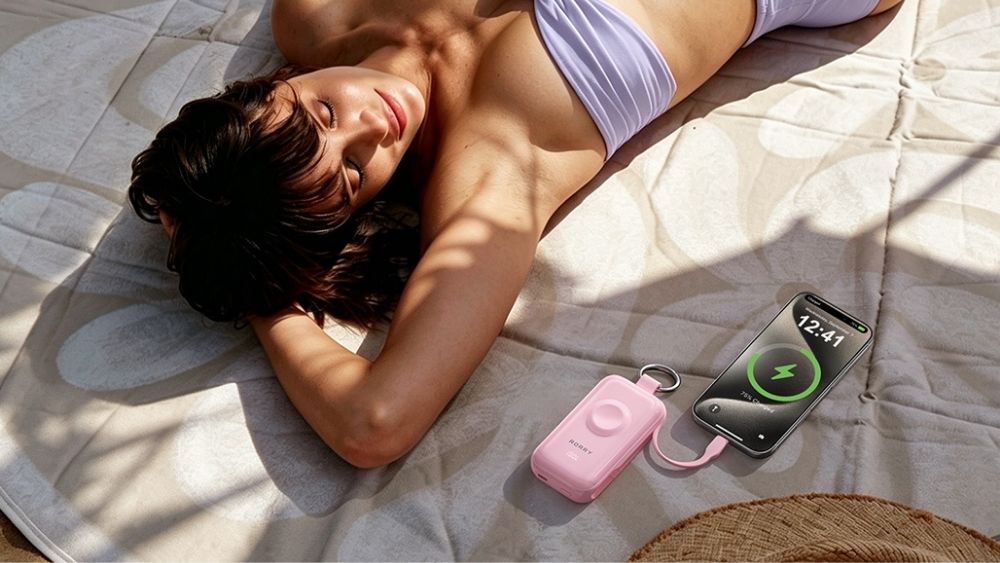
If you need that flexibility away from an outlet, the RORRY CharmGo D4 45W Power Bank combines up to 45W wired output with a 10,000mAh battery, built-in USB-C connections, Apple Watch charging, and a digital battery display. It suits compatible phones and tablets, while lower-power devices draw only the wattage they support.

Some Android phones exceed 45W through systems such as Motorola TurboPower, SUPERVOOC, and Xiaomi HyperCharge. These speeds often require the brand's protocol, adapter, and high-current cable. A generic 100W USB-C charger may therefore fall back to a lower PD or PPS rate.
There is no single wattage for every phone. Check the official specifications for the exact model because standard, Plus, Pro, Ultra, and Fold versions can have different limits.
Choose at least 20W USB-C for iPhone 12 and later. A 30W adapter adds headroom for newer models and shared devices. A standards-compliant 45W adapter also works, but it is rarely necessary for an iPhone alone.

Many Galaxy phones support 25W, while selected Galaxy S and Ultra models support 45W. For maximum speed, confirm the exact model, USB PD PPS support, and cable requirement.
Pixel power varies by model. Google recommends compatible USB-C PD chargers and PPS for higher rates on recent phones. A 30W adapter is practical for many Pixels; a 45W model adds compatibility but cannot exceed the phone's input limit.
Selected Motorola, OnePlus, OPPO, and Xiaomi phones support higher proprietary modes. Check whether the required adapter is included and whether the phone uses USB PD or a brand-specific system. Without the preferred equipment, it may charge safely through USB-C PD at a lower wattage.
If maximum speed is not necessary every time you plug in, understanding whether fast or slow charging is better for your battery can help you choose the more suitable charging approach for overnight use, quick daytime top-ups, and warmer conditions.
Peak wattage is not maintained from an empty battery to 100%. Charging speed changes throughout the session to manage temperature and battery stress.
Phones usually accept the most power when the battery is low, then slow near full charge. Fast-charging claims therefore often describe the first 30 minutes. Battery protection or an 80% limit can also delay or stop the final stage intentionally.
A warm battery cannot sustain the same rate as a cool one. Sunlight, a hot car, gaming, video, navigation, or a thick case can reduce power. Moving the phone somewhere cooler is more useful than buying a higher-wattage charger.
An old or incorrectly rated cable can block fast charging. Higher-current systems may require a 5A cable. Multi-port chargers can also divide their total output, so check each port combination rather than only the advertised total.
Start with the phone manufacturer's listed wired charging requirement. Then confirm that the charger supports the required USB PD, PPS, or other protocol and that the cable is rated for the same power.
Once you know that limit, it becomes easier to compare RORRY portable charger options by output, battery capacity, and the devices you carry instead of choosing by the largest number on the label.
Consider how many devices will charge at once because multi-port models need extra total wattage. Also check safety information, temperature and current protection, connector quality, warranty coverage, and portability.
Wattage affects speed, not the final percentage. A compatible 5W, 20W, or higher charger can reach 100%, although the phone slows near full. Use the recommended wattage for faster charging.
Yes, when the charger is properly designed and supports a charging standard compatible with the phone. A phone that accepts less than 30W requests a lower power level rather than receiving the full 30W continuously.
Not necessarily. Some phones support 45W charging, while lower-power phones can still use a standards-compliant 45W charger at their own supported rate. The extra wattage will not make a phone exceed its input limit.
Yes, provided the charger, cable, and phone use compatible standards. The phone should draw up to its 25W limit rather than the charger's full 65W. Charging may be slower if the adapter lacks the phone's required protocol.
Yes. A compatible 100W USB-C charger can power a 45W phone safely because the devices negotiate an appropriate level. The phone will not charge faster than its own maximum, and proprietary 45W modes may still require a specific protocol or cable.
Understand the phone's input limit first, then choose the matching wattage and protocol. Twenty to 45 watts covers many iPhone, Galaxy, and Pixel models, while selected Android phones can benefit from 65W, 80W, 90W, or faster brand-specific systems. A 5W charger remains suitable when speed is not important.


Share:
Top 10 Creative and Practical Corporate Gifts
RORRY to Exhibit at IFA Berlin 2026 - Power Bank