


- von kehuiyi
What Is Qi2 Wireless Charging? Qi vs Qi2 vs MagSafe
- von kehuiyi
There are currently three main wireless charging standards: Qi, MagSafe, and Qi2. Each works differently and supports different devices. This guide explains what each standard does, how they compare, and which one applies to your phone.
Qi (pronounced "chee") is the original universal wireless charging standard, developed by the Wireless Power Consortium (WPC) in 2010. It uses inductive charging: coils inside the pad and the phone create a magnetic field, which generates an electrical current to charge the battery.
The main limitation of Qi is coil alignment. For efficient charging, the transmitter coil in the pad and the receiver coil in the phone need to be closely aligned. If they are off by a few millimetres, charging slows significantly or stops altogether. iPhones on Qi were capped at 7.5W, and poor alignment converted wasted energy into heat. The standard improved over time, but never resolved the alignment issue at the hardware level.

Apple introduced MagSafe with the iPhone 12 in 2020. It added a ring of magnets to both the iPhone and the charger, which automatically aligns the two components when placed together. This guaranteed alignment enabled consistent 15W charging and eliminated the positioning issues common with standard Qi.
Two types of MagSafe accessories are sold, and they perform differently:
Made for MagSafe — includes Apple's authentication chip, which communicates with the iPhone to enable the full 15W charging speed.
MagSafe Compatible — has magnets for physical attachment but no authentication chip. Many MagSafe-compatible chargers without Apple's authentication may be limited to lower charging speeds on the iPhone.
MagSafe only works with Apple devices. Android phones receive no charging benefit from MagSafe hardware.
Qi2 is the second-generation wireless charging standard released by the WPC in 2023. Apple contributed its Magnetic Power Profile technology to the Qi2 standard, which became the basis for Qi2. This makes Qi2 an open standard that any manufacturer can implement without licensing fees.
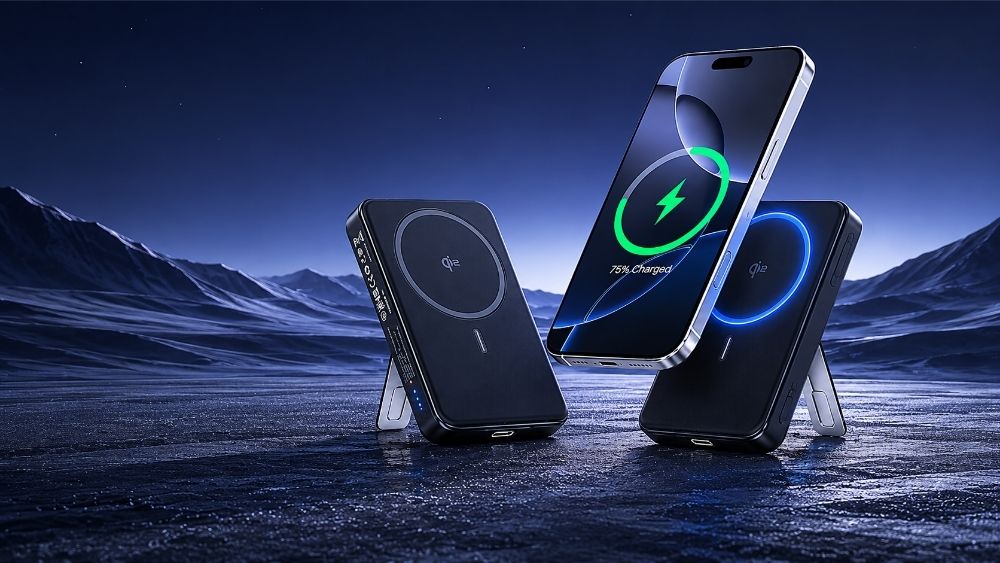
Qi2 uses the same magnetic ring alignment as MagSafe and delivers consistent 15W charging. Because it is an open standard, it works across both iOS and Android devices. A wireless charger certified to Qi2 provides consistent magnetic alignment and standardized charging behaviour across brands.
In July 2025, the WPC introduced Qi2.2 (also referred to as Qi2 25W), raising the maximum charging speed to 25W. iPhones 16 series and later can support up to 25W when used with a Qi2.2-certified charger under compatible system conditions, though support may vary by model. The magnetic alignment system is the same as Qi2; only the power delivery increases.
|
Feature |
Qi |
MagSafe |
Qi2 / Qi2.2 |
|
Max speed |
Up to 15W, depending on device and charger |
15W standard MagSafe; up to 25W with supported iPhone 16 models and compatible chargers |
15W / up to 25W (Qi2.2, July 2025) |
|
Magnetic alignment |
No |
Yes — Apple devices only |
Yes — open standard |
|
Compatibility |
Universal |
iPhone 12 and later only |
Most iPhone 12+, Samsung Galaxy S25, Pixel 10 series, and select Android flagships |
|
Certification body |
WPC |
Apple MFi |
WPC |
|
Accessory ecosystem |
All brands |
Apple + licensed third parties |
All brands |
|
Backward compatible |
— |
Charges older iPhones at Qi speed |
Charges Qi devices at Qi speed |
Most iPhone models from iPhone 12 onward include the magnetic ring and support Qi2 natively. Some models are exceptions — for example, the iPhone 16e does not support MagSafe or Qi2 magnetic charging. Check your specific model before purchasing a Qi2 accessory.
Qi2 support on Android is expanding. Currently confirmed compatible devices and brands include:
Samsung Galaxy S25 series — Qi2 ready, but a Qi2-certified magnetic case is required for snap-on alignment since the magnets are not built into the phone
Google Pixel 10 series — added built-in magnets for Qi2 MPP, no case required
Brands including OPPO, Xiaomi are adding Qi2 support across new flagship models
The Apple Watch uses a proprietary charging standard and cannot charge on Qi, MagSafe, or Qi2 pads. Multi-device charging stations address this by incorporating separate coils — a Qi2 coil for the iPhone and a dedicated Apple Watch puck in the same unit. A RORRY portable charger covers both devices without separate cables.

Yes. Because Qi2 is based on Apple's magnetic technology, MagSafe-enabled iPhones attach to Qi2 chargers and charge at up to 15W. With a Qi2.2-certified charger and a compatible iPhone 16 series or later device, speeds of up to 25W are possible depending on system conditions. Qi2 chargers are also backward compatible with standard Qi devices, which charge at Qi speeds.
Whether MagSafe works with non-Apple devices is a separate topic. MagSafe accessories can physically attach to some Android phones via magnets, but the charging behaviour is different from native Qi2 support.
For iPhone users on iPhone 12 or later, Qi2 is a practical upgrade. It provides the same magnetic alignment and 15W speed as MagSafe, with more accessory options at lower prices since manufacturers do not need Apple certification. A 3 in 1 wireless charger that charges an iPhone, AirPods, and Apple Watch at the same time is now available from multiple brands.
For Android users, compatibility depends on the device. Galaxy S25/S26 and Pixel 10 users benefit directly from Qi2. Earlier Android models can use Qi2 chargers, but will charge at standard Qi speeds without the magnetic alignment.
There is no immediate need to switch if your current device only supports Qi. Qi2 chargers are backward compatible, so purchasing one now means it will work correctly when you upgrade to a Qi2-compatible phone.
Across all three standards, using certified accessories is important. Uncertified products may not deliver the stated speeds and can affect charging reliability.
Yes. Qi2 chargers are backward compatible with Qi. Older iPhones will charge at their standard Qi speed without the magnetic alignment benefit.
Some recent Samsung Galaxy models support Qi2 or Qi2 Ready features. Compatibility may vary by model, and most Samsung devices require a Qi2-certified magnetic case for snap-on alignment. Check your specific model for confirmation.
Qi2 supports up to 15W. Qi2.2, introduced by the WPC in July 2025, supports up to 25W for compatible devices. iPhone 16 series and later can reach 25W with a Qi2.2-certified charger under compatible conditions, though support may vary by model.
No. iPhone 12 and later have the magnetic ring built into the phone. Android phones such as Samsung Galaxy models require a Qi2-certified magnetic case for full alignment.
Qi established the standard for wireless charging. MagSafe improved alignment and speed, but only for Apple devices. Qi2 brings the same magnetic approach to an open standard available to all manufacturers and device brands. For users on compatible devices, Qi2 offers reliable alignment, consistent charging speeds, and a wider range of compatible accessories.
Rorry's wireless charging accessories are built to Qi2 standards, providing stable magnetic alignment and full charging speeds across compatible iPhone and Android devices.


Share:
Why Does My iPhone Say It's Charging But It's Not? 9 methods
6 Types of Phone Chargers: How to Choose the Best