


- by EditorialTeam
iPhone 17 vs 17 Pro vs Pro Max: What’s Different?
- by EditorialTeam
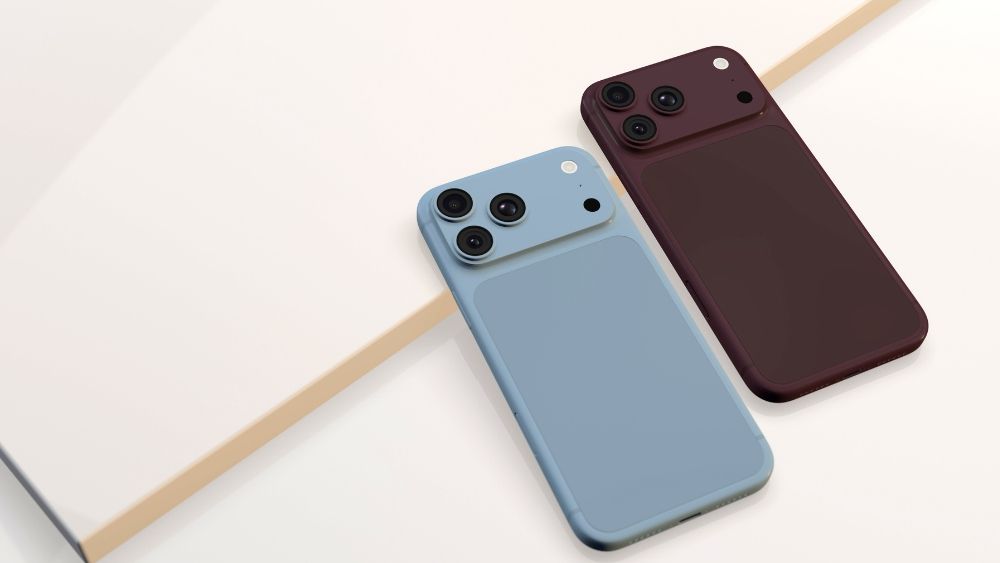
The iPhone 17 is the better buy for most people because it already has a 6.3-inch 120Hz ProMotion display, 256GB of base storage, strong everyday performance, and a capable dual 48MP camera system. Choose the iPhone 17 Pro for telephoto photography, pro video, faster USB transfers, and better sustained performance. Choose the Pro Max only if its 6.9-inch screen and longer battery life justify the extra size and weight. This guide shows where the price difference changes daily use and where it does not.
The standard model is no longer a stripped-down display choice. All three phones have ProMotion up to 120Hz, an Always-On display, 3000 nits of peak outdoor brightness, the 18MP Center Stage front camera, USB-C, and MagSafe and Qi2 charging up to 25W. If you also carry an Apple Watch, one compatible power bank for Apple Watch with USB-C output can work with any of the three phones. The Pro premium is concentrated in the rear cameras, sustained performance, storage, data transfer, and battery options.

|
Feature |
iPhone 17 |
iPhone 17 Pro |
iPhone 17 Pro Max |
|
Best for |
Most buyers |
Camera and video users |
Big screen and longest battery |
|
Launch price (U.S.) |
$799 |
$1,099 |
$1,199 |
|
Display |
6.3-inch OLED, 120Hz |
6.3-inch OLED, 120Hz |
6.9-inch OLED, 120Hz |
|
Chip |
A19, 5-core GPU |
A19 Pro, 6-core GPU |
A19 Pro, 6-core GPU |
|
Rear cameras |
48MP Main + 48MP Ultra Wide |
Three 48MP cameras + LiDAR |
Same Pro camera system |
|
Optical-quality reach |
0.5x, 1x, 2x |
0.5x, 1x, 2x, 4x, 8x |
0.5x, 1x, 2x, 4x, 8x |
|
USB data |
USB 2 up to 480Mb/s |
USB 3 up to 10Gb/s |
USB 3 up to 10Gb/s |
|
Storage |
256GB or 512GB |
256GB to 1TB |
256GB to 2TB |
|
Video playback |
Up to 30 hours |
Up to 33 hours |
Up to 39 hours |
|
Weight |
177g |
206g |
233g |
The iPhone 17 and 17 Pro both use a 6.3-inch Super Retina XDR OLED display with the same resolution, ProMotion up to 120Hz, Always-On support, and 3000-nit peak outdoor brightness. Buying Pro no longer gives you a smoother or brighter screen. That makes the standard iPhone 17 much easier to recommend than older base models that were limited to 60Hz.
The iPhone 17 is the lightest and thinnest of the three at 177g and 7.95mm. The 17 Pro is 206g and 8.75mm, while the Pro Max reaches 233g with the same 8.75mm depth. The Pro models use an aluminum unibody with a vapor chamber and Ceramic Shield protection on both front and back; the standard model uses an aluminum frame, Ceramic Shield 2 front, and color-infused glass back. The practical trade-off is simple: iPhone 17 is easier to carry, while the Pro body is built around cooling and camera hardware.
If portability is part of the reason you prefer the lighter iPhone 17 or smaller 17 Pro, the RORRY CharmGo® D4 10000mAh Portable Charger keeps its USB-C cable built in and can also charge an Apple Watch, so a travel setup needs fewer separate accessories.

For messaging, social apps, navigation, photography, and ordinary gaming, the A19 chip in iPhone 17 is already fast. Its 6-core CPU and 5-core GPU support Apple Intelligence and hardware-accelerated ray tracing. The A19 Pro keeps the same 6-core CPU layout but adds a 6-core GPU, more graphics headroom, and vapor-chamber cooling. The difference matters most during long gaming sessions, video editing, or other workloads that keep the chip busy for several minutes rather than a few seconds.
Storage and wired transfer can matter more than benchmark scores. iPhone 17 stops at 512GB and its USB-C port transfers data at USB 2 speeds up to 480Mb/s. The 17 Pro reaches 1TB, the Pro Max reaches 2TB, and both Pro models support USB 3 up to 10Gb/s. Anyone recording large ProRes files or copying media to an external drive will notice that difference; people who mainly charge through USB-C and use iCloud may not.
USB transfer speed and charging wattage describe different things, so the Pro models' faster data connection does not automatically make them charge faster. The phone charger wattage guide explains how charger output, phone input limits, and compatible charging standards work together.

Apple rates iPhone 17 for up to 30 hours of video playback, iPhone 17 Pro for up to 33 hours, and Pro Max for up to 39 hours. The standard and small Pro are close enough that battery life alone is not a strong reason to spend more. Pro Max is the clear choice for travelers, heavy camera use, gaming, or anyone who routinely finishes the day near empty.
Charging capability is effectively shared. Apple rates all three for up to 50% in about 20 minutes with a 40W-or-higher USB-C adapter and cable, or about 30 minutes with a 30W-or-higher adapter and a compatible MagSafe charger. They also support MagSafe and Qi2 wireless charging up to 25W. The box includes a USB-C cable but no power adapter.
If you would rather keep the phone, Apple Watch, and earbuds together on a desk or nightstand, the RORRY AuraDock® M2 4-in-1 Charging Station combines those charging positions with a detachable magnetic power bank. Its magnetic output reaches 15W rather than the iPhone's full 25W ceiling, so it is better suited to convenient overnight or workspace charging than the fastest possible wireless top-up.

The iPhone 17 has two useful rear cameras: a 48MP Fusion Main camera with optical-quality 2x telephoto framing and a 48MP Ultra Wide camera for wide scenes and macro shots. It is enough for family photos, travel, social media, and everyday 4K video. It also shares the 18MP Center Stage front camera with the Pro models, including automatic framing, Dual Capture, and ultra-stabilized video.
The Pro models add a third 48MP Telephoto camera, LiDAR, second-generation sensor-shift stabilization, 4x and 8x optical-quality reach, digital zoom up to 40x, ProRAW, ProRes RAW, Apple Log 2, genlock, and 4K120 recording. These are not small differences if photography or video is part of your work. If you rarely zoom beyond 2x and do not edit large video files, the standard model avoids paying for tools you may never use.
The Pro Max does not provide a better rear camera system or faster chip than the 17 Pro. Its reasons to exist are the 6.9-inch display, up to 39 hours of video playback, and a 2TB storage option. Choose it for the biggest viewing area, the longest battery life, or maximum local storage. Choose the smaller Pro if you want the same cameras and professional features in a more manageable 206g body.
Buy iPhone 17 if you want the best value, the lightest body, a 120Hz display, strong cameras, and 256GB of base storage.
Buy iPhone 17 Pro if you regularly use telephoto zoom, ProRAW or ProRes, external storage, intensive games, or sustained creative workloads.
Buy iPhone 17 Pro Max if the 6.9-inch screen and longest battery life matter more than pocket comfort and weight.
Skip a small Pro upgrade based only on display smoothness or ordinary charging speed; the standard model now matches it in both areas.
Yes, if you will use its telephoto camera, pro video formats, USB 3 transfers, greater storage range, or stronger sustained performance. For everyday apps, casual photos, and normal charging, the standard iPhone 17 offers better value because it already includes the 120Hz display and 256GB base storage.
Its main drawbacks are the higher price, heavier 206g body, thicker design, and features that many buyers may rarely use. Battery life is only three hours longer than the iPhone 17 in Apple's video-playback rating, so the small Pro is not a major battery upgrade.
At 206g, it is 29g heavier than the 177g iPhone 17 but 27g lighter than the 233g Pro Max. It is manageable for most users, although the difference is noticeable during one-handed use or when a protective case is added.
Yes. Its A19 Pro chip, 120Hz OLED display, three 48MP rear cameras, USB 3 support, and up to 1TB of storage remain high-end in 2026. Since Apple no longer sells it as the current Pro model, check the final price, battery condition, warranty, and return policy before buying retailer or refurbished stock.
At launch in the United States, iPhone 17 started at $799 and iPhone 17 Pro at $1,099, a $300 difference at the same 256GB starting capacity. Current retailer and refurbished prices vary, so compare equivalent storage and warranty coverage rather than relying only on the original gap.
The iPhone 17 is the sensible choice for most buyers because it now shares the Pro models' 120Hz display, high outdoor brightness, front camera, fast-charge targets, and 25W MagSafe and Qi2 support. The 17 Pro earns its higher price through telephoto photography, pro video, USB 3, greater storage, and stronger sustained performance. Pro Max is not a separate performance tier; it is the Pro for buyers who specifically want a larger screen, longer battery life, and up to 2TB of storage.
Share:
Why Are My AirPods Flashing Red? 7 Fixes to Try