


- by kehuiyi
Why Do Power Banks Get Hot? Causes and Cooling Solutions
- by kehuiyi
It is normal for portable chargers to generate some heat due to energy conversion and internal resistance, but they should never be too hot to hold. While mild warmth is a standard byproduct of operation, excessive heat can signal inefficiency or a potential fire hazard. This guide covers the technical causes, how to spot dangerous warning signs, and the best cooling solutions to keep your battery safe.
To understand why a power bank warms up, it is necessary to look at the basic physics of electricity and energy transfer. Heat is not always a sign of malfunction; it is often a natural result of the device's internal processes.
Power banks do not transfer energy with 100% efficiency. The internal battery cells typically store energy at 3.7 volts, but most smartphones and tablets require 5 volts (or higher for fast charging) to receive power.
Voltage Boosting: The power bank uses a circuit to convert (step up) the voltage from 3.7V to the required output.
Thermal Loss: During this conversion process, a percentage of energy is lost rather than being transferred to your device. This "waste" energy is released as heat, causing the casing to warm up.
Every battery and electronic component possesses internal resistance, which opposes the flow of electric current.
Friction: As electricity moves through the lithium-ion cells and circuitry, this resistance creates friction at a microscopic level, generating thermal energy.
Aging: As a power bank ages, its internal resistance naturally increases. This means an older portable charger will typically generate more heat than a new portable charger to perform the same task.

While mild warmth is normal, specific factors can push the temperature into a range that is dangerous or damaging to the battery.
Modern charging standards like Power Delivery (PD) and Quick Charge operate by pushing significantly higher voltage and current through the device.
High Power Load: Because heat generation is linked to the intensity of the power flow, outputting high wattage (e.g., charging a laptop) will naturally create more heat than slow-charging a pair of headphones.
Pass-through charging refers to the practice of charging a device (like a phone) while the power bank itself is plugged into a wall outlet for recharging.
Double Strain: Unless the Plug In Power Bank is specifically engineered for this, it forces the internal circuits to manage input and output simultaneously. This places extreme stress on the battery cells and results in excessive heat buildup.
The physical environment plays a critical role in the device's ability to dissipate heat.
Poor Ventilation: Power banks rely on passive cooling (air touching the casing). Placing a working power bank in a pocket, bag, or under a pillow traps the heat.
High Ambient Temperature: Using the device in a hot car or in direct sunlight raises its baseline temperature, making it difficult for the heat to escape.
Bad Cables: Damaged or low-quality cables can cause unstable electrical connections and increased resistance.
Incompatible Adapters: Using a wall charger that does not match the voltage or amperage requirements of the power bank can overload the input circuit.

Adopting specific usage habits can minimize heat generation and protect the device's long-term health.
Hard Surfaces: Always place the power bank on a hard, cool surface like a desk, counter, or tile floor while charging. These materials absorb and dissipate heat better than soft surfaces.
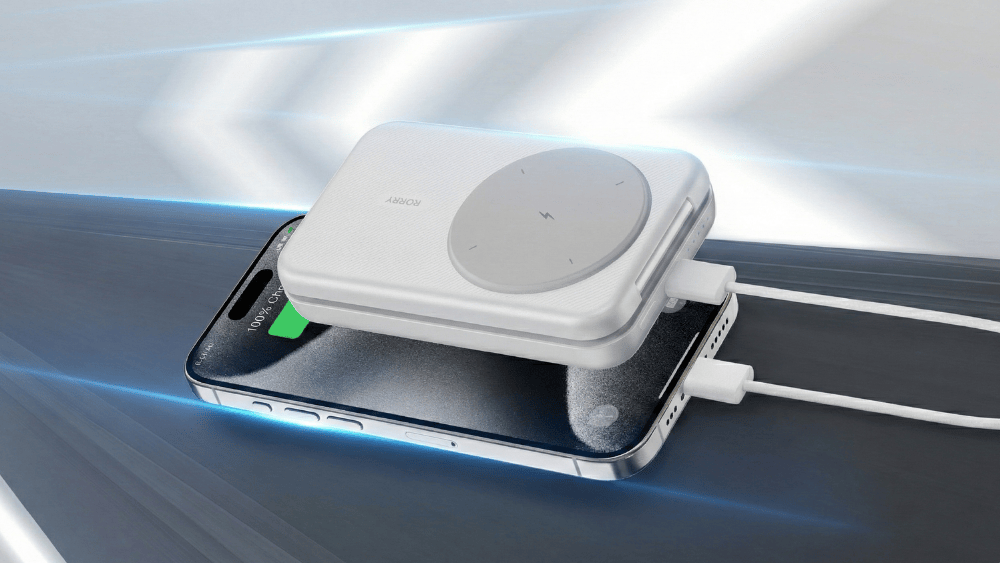
Airflow: Avoid stacking the power bank on top of the phone or covering it with blankets, clothing, or other devices.
Stop Pass-Through Charging: Charge the power bank first, then use it to charge your devices separately.
Idle the Phone: Avoid using processor-intensive apps on your phone while it is connected to the power bank, as this keeps the power draw at maximum levels for longer periods.
Quality Control: Use the original cables provided by the manufacturer or certified third-party options (like MFi). Reliable options, such as the built-in cables on RORRY chargers, ensure stable current flow and reduce resistance-based heating.

If your device becomes uncomfortably hot to the touch, take immediate action to lower its temperature safely.
Disconnect: Unplug all cables immediately to stop the flow of electricity and heat generation.
Relocate: Move the device to a cool, shaded area away from direct sunlight or electronics.
Uncover: If the power bank is in a protective case or pouch, remove it to expose the casing directly to the air.
Avoid Ice Packs or Extreme Cold: Do not try to cool the device quickly using ice packs or damp cloths. Rapid temperature changes can cause condensation to form inside the portable charger, leading to moisture damage and short circuits.
It is critical to distinguish between a functional hot battery and a failing one. If you observe any of the following signs, the device is dangerous.
Swelling: If the casing looks puffy, bloated, or warped, the internal battery cells are damaged and releasing gas. This is a severe fire hazard.
Melting: Any visible melting of the plastic shell or scorch marks around the USB ports indicates a short circuit or thermal failure.
Smell: A strong chemical odor or the smell of burning plastic is a sign of internal component failure.
Too Hot to Touch: If the device is so hot that it is painful to hold, the internal safety regulation has likely failed.
Significant Speed Drop: If the power bank takes much longer to charge your phone than when it was new, the internal resistance has likely increased, indicating degraded battery health.
Weak Magnetic Hold: For wireless portable chargers, if the magnetic attachment feels weak or the phone slides off easily, it may indicate casing wear or slight warping. This leads to misalignment, inefficient charging, and excess heat.

Knowing how to properly charge a power bank is the best way to prevent overheating and premature damage.
Monitor the Charge: Do not leave the power bank plugged in for days at a time. Unplug it once it reaches 100% to prevent trickle-charging heat buildup.
Clean Ports: Regularly inspect the USB ports for lint, dust, or debris. A dirty port increases resistance and can cause the connector to overheat.
Cool Environment: Always recharge the power bank in a room with a moderate temperature, avoiding areas near heaters or windows with direct sun.
Generating mild heat is a natural part of battery operation, but it should never compromise safety. By practicing good habits—like ensuring proper ventilation and choosing reliable devices from brands like RORRY—you can minimize thermal risks and extend your battery’s life. However, if your portable charger ever swells, smells of burning, or shows a sudden drop in performance, retire it immediately to ensure your safety.
Yes, though it is rare. If a battery has internal damage (from a drop) or defects, it can enter "thermal runaway" and ignite even without being plugged in. If your power bank is swollen, do not keep it; recycle it immediately.
Only if it is too hot to hold comfortably or smells like burning plastic. Mild warmth is normal, but extreme heat signals a safety failure. Unplug it immediately to let it cool down.
Yes. Wireless charging is less efficient than using a cable. The energy lost during the magnetic transmission process converts into heat, making these devices naturally warmer than standard wired chargers.
Over time, yes. Fast charging generates more heat than standard charging. Frequent exposure to high temperatures accelerates the chemical degradation of lithium-ion cells, shortening the battery's overall lifespan.
It is best to avoid it. Using your phone while charging forces the power bank to work harder for longer. This prevents the battery from resting and cooling, leading to unnecessary overheating.


Share:
What Power Bank Capacity is Allowed on Planes? 2026 Rules
MagSafe vs. USB-C: 6 Ways to Tell Which Is Better