


- by kehuiyi
MagSafe vs. USB-C: 6 Ways to Tell Which Is Better
- by kehuiyi
With the full transition of the iPhone to the USB-C standard and the continuous refinement of MagSafe technology, users now have two powerful ways to stay charged. Understanding the fundamental differences between these two is the first step in optimizing your charging setup.
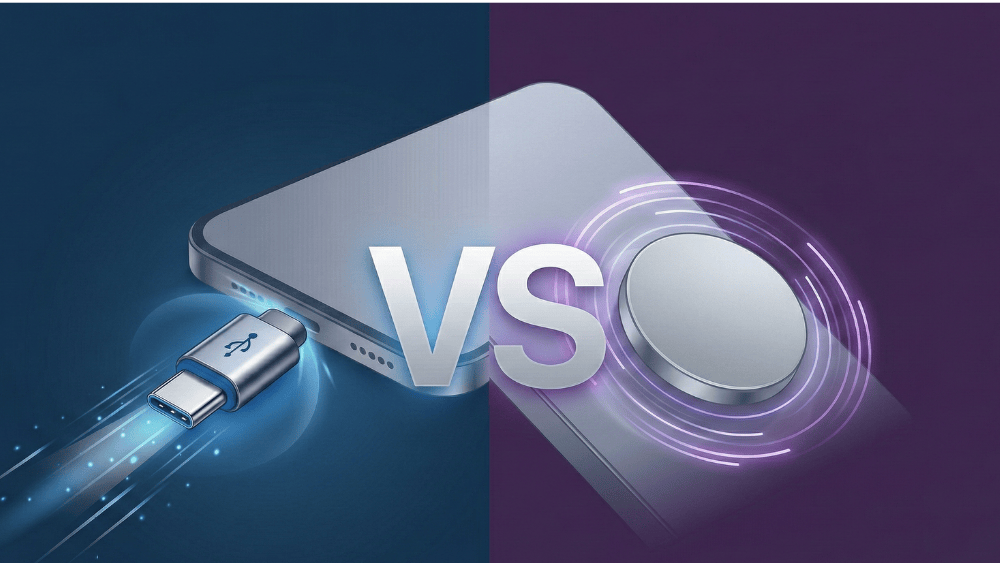
Apple’s magnetic wireless system. It uses internal magnets to snap the charger onto the back of your iPhone, ensuring perfect alignment. Magsafe is built for convenience and effortless daily use.
The universal wired standard for power and data. Since the iPhone 15, it has allowed users to charge their Mac, iPad, and iPhone with a single cable. It is built for raw performance and efficiency.

In terms of raw power delivery, USB-C remains the superior option.
USB-C: Since the iPhone 15 series, the USB-C port has allowed for significantly faster charging. Using a 30W or higher Power Delivery (PD) adapter, an iPhone can typically charge from 0% to 50% in approximately 25 minutes. Energy transfer is highly efficient, meaning most of the power from the wall goes directly into your battery.
MagSafe: Standard MagSafe offers up to 15W of power. While the iPhone 16 series can reach up to 25W wirelessly when paired with a 30W adapter, it is still slower than a direct wired connection. Wireless charging involves induction, which results in energy loss (usually 30-40%) during the transfer process.
MagSafe was designed to solve the friction associated with traditional charging.
MagSafe: Its core benefit is "snap-and-go" simplicity. Magnets ensure perfect alignment every time—no more fumbling for a port in the dark. In particular, the MagSafe Charging Stand is an ideal choice for bedside tables, desks, and car mounts, allowing for easy one-handed operation and a cable-free aesthetic.
USB-C: A secure, "locked-in" connection, but it remains a manual, two-handed process. It requires precise movement to avoid scratching the port area, though it is ideal for users who move the phone aggressively.
Heat is the primary factor in the long-term degradation of lithium-ion batteries.
USB-C: Wired charging is more efficient and generates less waste heat. Because the energy transfer is direct, the phone remains cooler during the charging cycle, which is generally better for preserving battery health over several years.
MagSafe: Wireless charging naturally generates more heat due to the inefficiency of induction. In warm environments, the iPhone may automatically reduce charging speeds or stop charging entirely at 80% to protect the battery from heat-induced damage.
Tip: Professional brands like RORRY often include advanced thermal management chips in their MagSafe portable charges and chargers to mitigate these heat issues.、

The USB-C port is a multi-functional gateway, whereas MagSafe is primarily for power and mounting.
USB-C: Beyond charging, USB-C allows for high-speed data transfer (up to 10Gbps on Pro models). You can connect external SSDs for direct video recording, output 4K video to a monitor via DisplayPort, or even use your iPhone to reverse-charge your AirPods or Apple Watch.
MagSafe: MagSafe is a physical platform for accessories. It allows for magnetic wallets, snap-on battery packs, and specialized stands that can change the physical utility of your phone without occupying the data port.
USB-C: Constant plugging and unplugging can eventually wear down a physical port or lead to lint and debris buildup inside the USB-C opening.
MagSafe: MagSafe reduces the need to use the physical port, potentially extending the life of the internal connectors. However, constant magnetic contact can sometimes leave slight imprints on certain leather or soft-touch silicone cases.
USB-C: This is the global standard. One USB-C cable can charge your MacBook, iPad, iPhone, Kindle, and most modern headphones. It is the ultimate choice for travelers who want to carry as few cables as possible.
MagSafe: While primarily for iPhone, MagSafe is compatible with non-Apple devices via the universal Qi standard. It can power Android phones or various earbuds, though you'll miss out on the magnetic "snap" and peak speeds found on iPhone 12 or newer models.
|
Feature |
USB-C (Wired) |
MagSafe (Wireless) |
|
Peak Speed (iPhone 17) |
Up to 30W |
Up to 25W |
|
0-50% Charge Time |
~30 Minutes |
~30-45 Minutes |
|
Energy Efficiency |
High (~90%) |
Moderate (~60-70%) |
|
Heat Generation |
Low to Moderate |
Higher |
|
Data Transfer |
Yes (High Speed) |
No |
|
Best Use Case |
Emergency top-ups, Travel |
Nightstand, Desk, Car |
 4. Final Verdict: How to Choose?
Choosing between the two depends entirely on your current situation and priorities.
When you need the quickest possible battery top-up.
When you want a single-cable solution for all your devices while traveling.
When you require high-speed data syncing or local backups.
When prioritizing cooler charging to extend your battery's lifespan.
When you value effortless, one-handed "snap-and-go" convenience.
When using a magnetic ecosystem of wallets, stands, or car mounts.
When you prefer a tidy, wire-free look for your desk or nightstand.
When you want to protect your physical port from long-term mechanical wear.
When you need to keep your charging port free for other accessories.
The smartest solution is a hybrid portable charger from reliable brands like RORRY. These chargers combine MagSafe wireless and USB-C wired in one unit. You can snap it on for cable-free ease while out, or plug in for a 40W boost when you're in a hurry—giving you the best of both worlds in a single device.
The debate isn't about which is better, but which fits your moment. USB-C is your high-performance tool, essential for maximum speed, travel, and pro-level data tasks. MagSafe is your lifestyle companion, offering unmatched convenience and a clutter-free experience for your desk, car, or bedside.
The most effective strategy is a hybrid approach. Use USB-C when you need a fast power injection, and let MagSafe handle your effortless daily charging. By integrating both into your routine, you enjoy the full potential of your iPhone’s charging ecosystem.
No. Your iPhone will intelligently prioritize the USB-C connection for its superior speed and efficiency, ignoring the MagSafe input.
Technically no, but practically yes. Without a MagSafe-compatible case, the magnetic grip will be too weak to support the phone on stands or car mounts.
Potentially. Avoid sandwiching standard magnetic-stripe cards between the charger and phone. Using a shielded MagSafe wallet is the safer way to carry cards.
Yes. MagSafe chargers work perfectly with any wireless-charging AirPods case, providing a secure magnetic sweet spot.
Not with MagSafe. Unlike standard wireless pads that require precise placement, MagSafe’s magnets ensure a perfect 360-degree alignment every time.


Share:
Why Do Power Banks Get Hot? Causes and Cooling Solutions
Fast vs. Slow Charging: Which is Better for Your Battery?